Are you weighing a PCB condo for rental income but unsure which amenities actually move the needle? You are not alone. In a seasonal, beach-driven market like Panama City Beach, the right features can lift ADR and occupancy, while the wrong ones simply raise your COA fees. In this guide, you will learn which amenities typically deliver returns here, what they cost to operate, and how to run a quick ROI check before you buy. Let’s dive in.
PCB demand and seasonality
Panama City Beach is a high-seasonal, leisure market with peak demand in spring and summer. Families and short-stay leisure travelers dominate, with many trips in the 3 to 7 night range. That pattern favors convenience and family-friendly features.
In peak months, beachfront and pool access matter most because they align with why travelers come to PCB. During shoulder and winter seasons, amenities that extend usability, like heated pools and covered parking, can help bookings.
Amenities that drive ROI in PCB
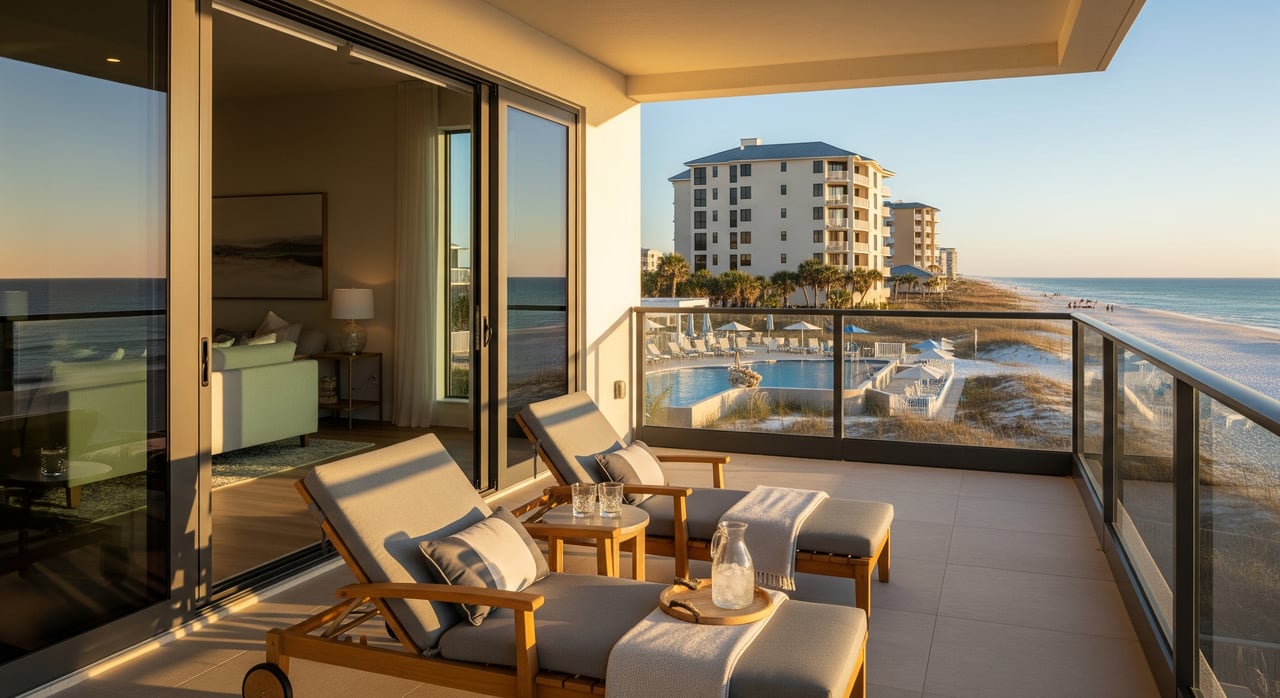
Beachfront or direct beach access
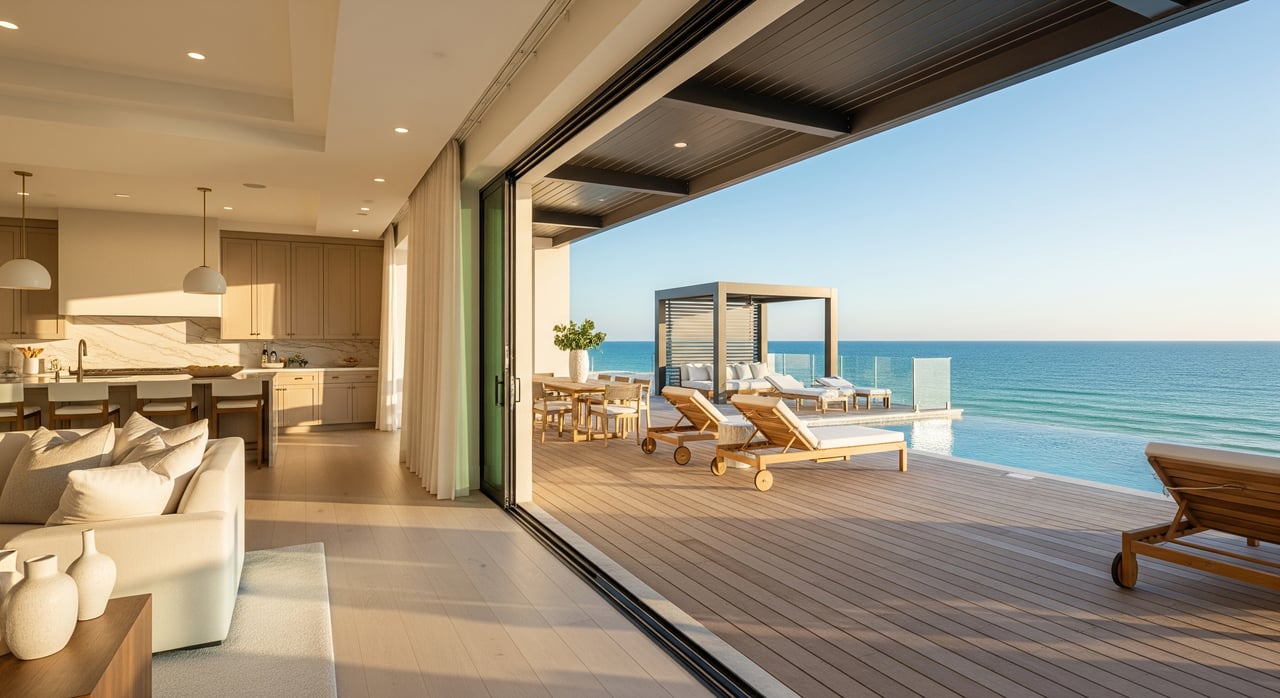
Beachfront is the most consistent driver of ADR and occupancy in PCB. Guests pay a premium for the experience and convenience, especially in peak season.
- Revenue: Strong, reliable uplift versus similar non-beachfront units.
- COA impact: Higher building insurance, storm hardening, and shoreline upkeep increase monthly dues and reserves.
- Investor takeaway: Treat beachfront as a performance leader with higher cost and risk. Compare the ADR premium to COA, insurance, and potential special assessments.
Swimming pools and heated pools
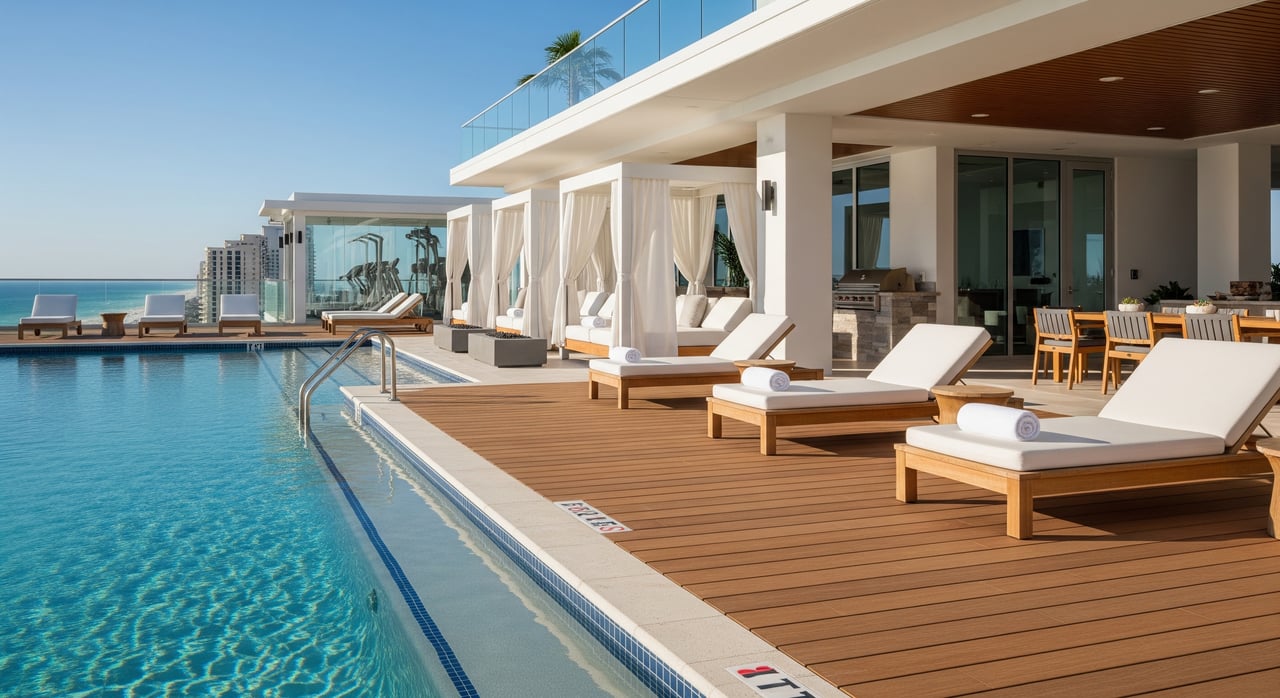
Families prioritize pools, and a heated option can help you capture shoulder-season stays.
- Revenue: Solid occupancy support, especially for families. Heated pools add off-peak appeal.
- COA impact: Noticeable. Chemicals, utilities, maintenance, and capital replacement raise dues.
- Investor takeaway: Good for bookings, but run the per-unit share of pool costs against your expected ADR and occupancy lift.
Parking that is free and dedicated
Free, on-site parking is an underappreciated conversion booster, especially for families with gear.
- Revenue: Improves booking conversion and reduces cancellations and negative reviews.
- COA impact: Surface parking is lighter on budgets. Covered structures and elevators increase costs and insurance.
- Investor takeaway: A practical amenity with favorable ROI potential. Verify whether structured parking costs are reflected in higher owner fees.
Fitness center or gym
On-site fitness can be a tie-breaker at mid-to-upper tiers but usually yields smaller ADR gains than beachfront or pools.
- Revenue: Modest uplift, more hygiene than headline driver.
- COA impact: Equipment, maintenance, cleaning, and potential staffing add ongoing costs.
- Investor takeaway: Useful where competitors offer it. In smaller buildings, a local gym partnership can be more efficient than a full facility.
On-site dining, restaurants, or bars
On-site dining elevates a resort feel, but the owner-level payoff varies.
- Revenue: Can improve overall property appeal but does not guarantee proportional ADR growth for individual units.
- COA impact: Depends on lease terms. Restaurants add cleaning, security, and insurance considerations in adjacent common areas.
- Investor takeaway: Analyze tenant terms, cost offsets, and any revenue sharing. A strong tenant helps. A weak one can create noise without returns.
In-unit essentials: Wi-Fi, kitchen, laundry
These are high-value must-haves for short-term guests and typically show up in reviews.
- Revenue: Strong correlation with occupancy and guest satisfaction.
- COA impact: Usually minimal because owners handle in-unit items. Building-wide Wi-Fi may be a shared cost.
- Investor takeaway: High ROI and relatively low risk. Prioritize reliable Wi-Fi, a functional kitchen, and in-unit laundry.
What moves the needle most
- High-impact drivers: Beachfront access, pool access, dedicated parking, and in-unit essentials.
- Moderate-impact drivers: Heated pools, fitness centers where competitive sets expect them.
- Variable-impact drivers: On-site dining, depending on tenant quality and how costs are structured.
The pattern is simple. Amenities that directly improve the beach vacation experience or frictionless stays tend to pay. Amenities that raise operational complexity or staffing without clear guest demand can inflate costs more than returns.
How amenities affect your COA
Your monthly dues reflect the true cost of amenities. Typical drivers include:
- Insurance premiums: Master policy, liability for pools and gyms, and coastal risk.
- Utilities and operations: Pool heating and filtration, common-area HVAC, lighting, and building-wide internet.
- Maintenance: Parking surfaces or structures, elevators, landscaping, exterior upkeep, and corrosion mitigation.
- Staffing and services: On-site management, security, lifeguards, and increased common-area cleaning.
- Reserves and capital projects: Pool system replacements, elevator modernization, roofs, and façade repairs.
Risk factors like coastal exposure, older buildings with deferred maintenance, dense amenity packages, and regulatory upgrades can accelerate dues increases and special assessments.
A simple ROI framework you can use
Use this step-by-step approach before you buy or upgrade.
Step 1: Estimate revenue uplift
Identify comparable PCB listings that lack the amenity you are evaluating. Compare ADR and occupancy over 12 to 24 months if available. Focus on peak and shoulder seasons.
Step 2: Calculate per-unit amenity cost
Add annual operating expenses for the amenity to annual reserve contributions, then divide by the number of units. Include likely insurance impacts and any special assessments.
Step 3: Net impact on cash flow
Estimate annual incremental revenue using your ADR difference times booked nights and any occupancy gain. Subtract the per-unit amenity cost. That net is your pre-tax cash flow impact.
Step 4: Stress-test for risk
Model a softer shoulder season, a storm year with special assessments, and insurance increases in the 10 to 30 percent range. Check if the investment still makes sense.
Step 5: Add non-financial factors
Consider resale value, ease of management, and guest experience. Beachfront, a well-maintained pool, and covered parking often help resale and liquidity.
Due diligence checklist for PCB condos
Before you commit, request documents and ask targeted questions.
- STR comps: Pull ADR, occupancy, seasonality, and typical length of stay for the building and nearby buildings.
- Association financials: Review the budget, reserves, and minutes for the last 2 to 3 years.
- Insurance: Ask for the master policy, wind and flood coverage, deductibles, and renewal history.
- Amenity costs: Verify what is included in COA fees and what is assessed separately.
- Building health: Check age, planned capital projects, and any hurricane or structural repairs.
- Rental rules: Confirm short-term rental allowances, minimum stays, owner-use restrictions, and management requirements.
- Physical inspection: Review pool equipment, HVAC, elevators, balconies, and waterproofing.
- Performance history: Request occupancy and rental revenue history by unit if available.
Red flags to note:
- Rising insurance deductibles or premiums without a mitigation plan.
- Deferred maintenance or underfunded reserves in the latest study.
- Frequent special assessments in recent years.
- Association disputes or litigation in meeting minutes.
- Unstable commercial tenants or unclear maintenance obligations for shared areas.
Putting it all together
In Panama City Beach, beachfront location, pools, parking, and in-unit essentials are your clearest path to stronger ADR and occupancy. Heated pools and gyms can help, but only if costs are in line with your comps. On-site dining is a case-by-case call that depends on lease structure and tenant strength. The best practice is to run a simple incremental revenue versus incremental cost analysis and stress-test it for seasonality and storm risk.
If you want a candid read on specific buildings, COA health, and rental comps, let’s connect. As a locally rooted, senior-level advisor with Compass resources, Bedel Thomé can help you evaluate options, review association documents, and position your purchase for both lifestyle and returns. Reach out to Bedel Thomé to start a focused, numbers-forward conversation.
FAQs
Do beachfront PCB condos earn higher ADR and occupancy?
- Yes. Beachfront access is a leading driver of ADR and occupancy in PCB, especially in peak season, though it also comes with higher insurance and maintenance costs.
Are heated pools worth it for PCB rentals?
- Often. Heated pools can help capture shoulder and winter bookings, but you should compare the expected revenue gain to the added utility and maintenance costs.
How important is dedicated parking for PCB condos?
- Very. Free, on-site parking improves booking conversion and guest reviews, particularly for families and longer stays, with relatively modest operating costs for surface lots.
Do fitness centers increase rental income meaningfully?
- Usually modestly. A gym is often a competitive necessity at certain price points, but it tends to deliver smaller ADR gains than beachfront or pool access while adding upkeep costs.
Does on-site dining raise my unit’s rental revenue?
- It depends. A strong restaurant can enhance property appeal, but the direct benefit to an individual unit varies and may not offset higher association costs without favorable lease terms.
Which in-unit amenities matter most for ROI?
- Reliable high-speed Wi-Fi, a full kitchen, and in-unit laundry consistently support higher occupancy and better reviews, typically with minimal impact on shared COA fees.